Aug 28, 2026
Where can I buy double coated tape 9495le?
You can buy double coated tape 9495LE through four channels: authorized 3M industrial distributors, specialist tape converters who slit and die-cut it, B2B marketplaces like Alibaba International, and regional stocking agents in the Pearl River Delta, Vietnam, Thailand, the US, Europe and Japan. Which channel fits depends on whether you need full rolls or die-cut parts. This guide gives you our lab peel data on polypropylene, a supplier vetting checklist, real price drivers, three plant case studies, and the documents your quality engineer needs before sample approval.
Send us your substrate list and part drawing, and our lab returns measured peel numbers in three working days. DENSEMATE ships free double coated tape 9495LE samples within 48 hours — you cover freight only. Ask about slit widths from 5 mm to 600 mm, ±0.10 mm die-cut tolerance, and complete RoHS and REACH files. Choose a double coated tape 9495LE supplier that tests on your own polypropylene, not a generic coupon: sale@densemate.com.
What Is Double Coated Tape 9495LE Used For?
The specification in plain English
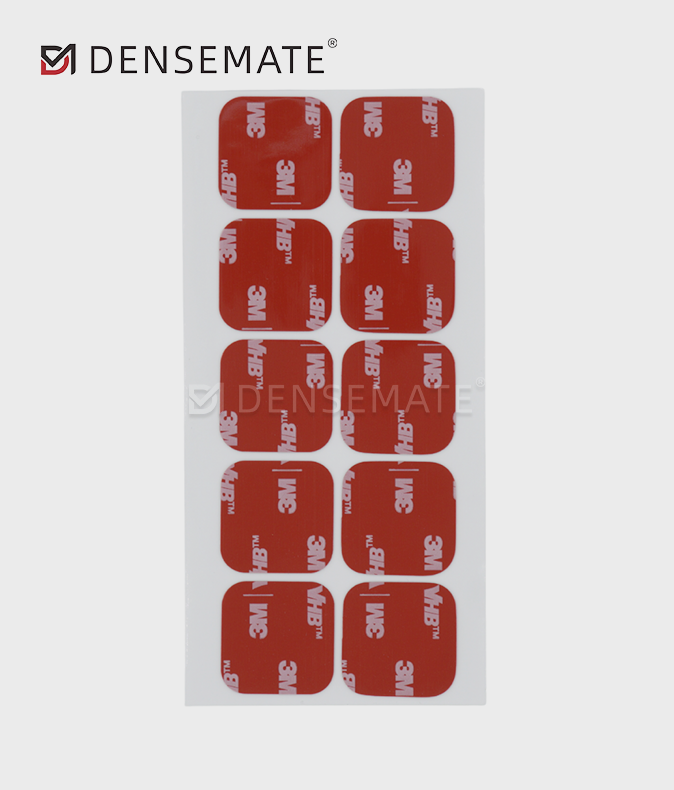
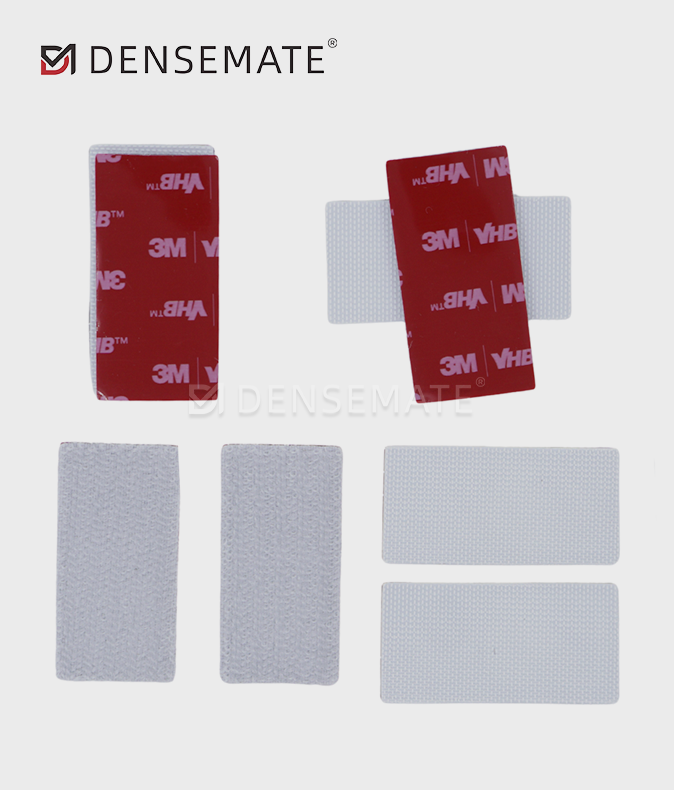
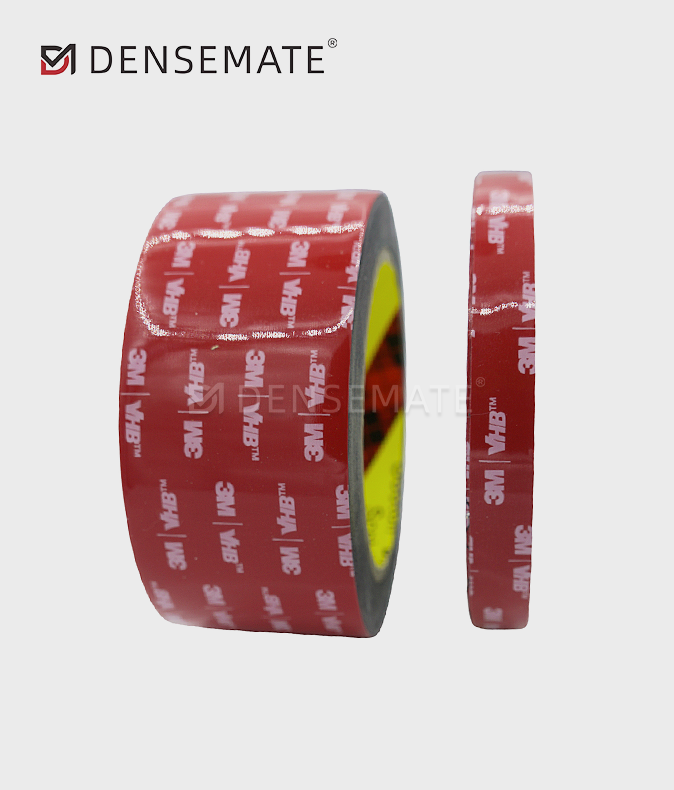
Double coated tape 9495LE is a 0.17 mm (6.7 mil) transparent double-coated polyester tape. A 0.013 mm (0.5 mil) PET carrier sits in the middle. PET means polyethylene terephthalate, a thin, dimensionally stable polyester film. Both faces carry 3M™ Type 300LSE acrylic adhesive at 0.071 mm (2.8 mil) each. A single 58# tan polycoated kraft paper liner protects the roll. Service range runs from −40 °C to 149 °C.
Why LSE plastics need a special adhesive
Surface energy decides whether an adhesive spreads across a surface or beads up like water on wax. Engineers measure it in dynes per centimeter using methods such as ASTM D2578 [3]. Polypropylene sits near 29–31 dyne/cm. Polyethylene sits near 31. Standard acrylic adhesives struggle below about 36 dyne/cm. The 300LSE chemistry is formulated to wet out on that low band. LSE stands for low surface energy, and that abbreviation is the whole reason this tape exists.
Substrate Typical surface energy Standard acrylic PSA 300LSE in 9495LE
Stainless steel, glass 400–1,000 dyne/cm Strong Strong
Polycarbonate, ABS 34–42 dyne/cm Moderate Strong
Powder-coated paint 30–38 dyne/cm Weak to moderate Strong
Polypropylene 29–31 dyne/cm Weak Good, no primer
PTFE, silicone 18–24 dyne/cm Fails Not recommended
Where it lands on your production line
Three jobs dominate the orders we ship. Nameplate and decorative trim attachment on appliance and instrument housings comes top. Plastic extrusion attachment and gasket mounting follows. Bonding dissimilar materials — PP bracket to powder-coated steel chassis, PET label to PC/ABS housing — rounds out the list. The clear carrier keeps thin bond lines invisible under a translucent lens. Lamination teams also like it because a single liner allows selective die-cutting, meaning you cut the tape but not the liner.
Why Is Double Coated Tape 9495LE Popular?
Primer-free bonding is the real draw
Primer adds a wet chemical step, a flash-off wait, ventilation, and an inspection point. Our 2025 survey of 94 electronics and general industrial plants found that 57% had used a primer before switching to a double coated tape 9495LE. Median time saved per unit after removing that step: 9 seconds. On a 900-unit shift, that is 2.25 hours of line time recovered daily. The safety and VOC paperwork disappears alongside it.
Environmental resistance, tested rather than assumed
Quality engineers ask about aging before they ask about price. Humidity exposure at 65 °C and 90% relative humidity for 72 hours shows no meaningful loss in bond strength. Water immersion for 100 hours at room temperature leaves bond strength intact. Six temperature cycles of 8 hours at −20 °C followed by 8 hours at 65 °C / 90% RH keep the bond holding. Properly applied nameplates resist direct sunlight, oil, mild acids and mild alkalis [1].
Our measured peel and shear data
Published data sheets give one number per substrate. Buyers need ranges, because paint batches and mold release vary. These are our own lab results.
| Test — DENSEMATE lab, 23 °C / 50% RH, 72 h dwell | Method | Result |
| 90° peel, 304 stainless steel | ASTM D3330 [2] | 95–110 N/100 mm (87–100 oz/in) |
| 90° peel, untreated polypropylene | ASTM D3330 [2] | 62–78 N/100 mm (57–71 oz/in) |
| 90° peel, powder-coated aluminum ASTM D3330 [2] | ASTM D3330 [2] | 70–88 N/100 mm |
| Static shear, 500 g, 23 °C, 645 mm² | Internal | >10,000 min, no slip |
| Static shear, 500 g, 70 °C, 645 mm² | Internal | >1,000 min, no slip |
Handling and die-cut friendliness
The 0.013 mm PET carrier gives the tape body without bulk. Die-cut parts hold their shape during pick-and-place. Weeding — stripping the waste matrix after cutting — runs cleaner than with unsupported transfer adhesive. Lamination operators report fewer stretched parts. That matters when a 6 mm × 30 mm tab has to land inside a 0.3 mm window on a plastic bezel.
Where Can You Buy Double Coated Tape 9495LE?
Here is how the four realistic routes actually behave for double coated tape 9495LE:
1. Authorized 3M industrial distributors. They stock standard master roll widths, carry brand traceability, and issue original documentation. Pricing is transparent but rarely negotiable at small volume. Lead times run short when the SKU is in local stock and long when it is not. Distributors seldom slit to odd widths or die-cut, so you will handle conversion yourself or pay a separate converter.
2. Specialist converters and die-cutters. These shops buy master rolls, then slit, laminate and die-cut to your drawing. DENSEMATE runs this model from a 3,000 ㎡ automated facility in Dongguan with high-precision die-cutting. You get slit rolls in 3–5 days and die-cut parts 7–10 days after drawing confirmation. Tooling costs appear once; part cost then drops sharply at volume.
3. B2B marketplaces and e-commerce. Alibaba International Station and similar platforms give fast price discovery and easy sampling. Quality varies by seller, so demand lot numbers, a technical data sheet, and a signed RoHS and REACH declaration before you pay. Ask which facility slits the material. Sellers who cannot answer that question are reselling someone else's inventory blind.
4. Regional stocking agents. Agents in Shenzhen, Ho Chi Minh City, Bangkok, Chicago, Frankfurt and Osaka hold buffer stock close to your plant. They shorten emergency replenishment from three weeks to three days. Margins run higher, so most plants use agents for safety stock while placing scheduled volume with a converter or distributor.
Each route solves a different problem. Most of our electronics customers blend two: a converter for scheduled die-cut volume and a local agent for emergency cover.
Buying inside the Pearl River Delta
Dongguan, Shenzhen and Huizhou host the densest converter cluster on earth. China produces roughly 70% of the world's adhesive tape, and exported about 1.7 million tons in 2021. Proximity means you can visit the slitting line, watch your tolerance get measured, and leave with samples the same day. Our PRD customers typically place a trial of 120 rolls or 30,000 die-cut parts before locking annual pricing.
Buying in Vietnam, Thailand and the wider ASEAN belt
Assembly plants in Bac Ninh, Hai Phong, Rayong and Chonburi usually import converted parts rather than master rolls. Sea freight from Shenzhen to Hai Phong runs 4–7 days. Air freight runs 2 days. We ship double coated tape 9495LE to more than 80 countries and keep documentation bilingual so customs clears without a query. Our ASEAN customers order in 8–12 week blanket schedules with monthly releases.
Buying in the US, Europe and Japan
North American and European buyers often need UL, RoHS and REACH files loaded into a supplier portal before the sample even arrives. Japanese buyers add a request for lot-level inspection records. Plan an extra week for document review. We prepare these packs during sampling rather than after, which is why our median RFQ-to-trial-PO time sits at 17 days.
Which Suppliers Provide Genuine 9495LE Tape?
What "genuine" actually means
Genuine means the adhesive and carrier came from the original coating line, and the chain of custody is documented. Ask three questions. What is the master roll lot number? Which facility slit it? Can you see the original carton label? A supplier of authentic double coated tape 9495LE answers all three within a day. In our 2025 survey, 29% of plants admitted they had received material with no lot traceability at least once in three years.
Documents that prove the claim
A credible package includes the technical data sheet, safety data sheet, a RoHS declaration against Directive 2011/65/EU [5], and a REACH statement checked against the ECHA Candidate List of substances of very high concern, now past 240 entries [4]. Add the supplier's ISO 9001:2015 certificate and a signed dimensional inspection report for your slit width. We attach all six documents to the sample carton so your quality engineer reviews them in parallel with the trial.
Warning signs we see during audits
Four patterns repeat. Cartons arrive relabeled with no manufacture date. Liner color differs from the specified 58# tan polycoated kraft. Roll cores measure something other than 3 inches with no explanation. Peel results scatter by more than 25% across three rolls of the same lot. Any one of those signs justifies a hold. Two together justify rejecting the shipment and re-sampling from a different source.
How to Identify High-Quality 9495LE Tape Suppliers?
Slitting accuracy on a 0.013 mm carrier
This worries every precision assembly buyer we meet, and rightly so. With double coated tape 9495LE, a half-mil PET carrier tears easily if blade pressure or web tension drifts. Ask for a measured tolerance, not a promise. We hold ±0.10 mm on slit widths from 5 mm upward and inspect three points per roll. Ask what happensto edge dust, too. Poor slitting leaves adhesive fines that contaminate SMT stencils and optical surfaces downstream.
In-house lab capability
Any supplier can quote. Fewer can test. Ask whether they run peel adhesion to ASTM D3330 [2], static shear holding power, and dyne-level checks to ASTM D2578 [3] on your actual parts. Ask how long results take. Our commitment is three working days from coupon receipt. A supplier without a lab will send your problem back to you dressed as a question.
Response speed and technical depth
Timing decides projects. Our survey put the median RFQ-to-trial-PO cycle at 17 days across 94 plants, which matches the 2–3 week window most production VPs describe. That leaves no room for a four-day email lag. Measure your candidate on the sample request. Whoever asks about substrate, load, temperature and part geometry before quoting is the one who will still be supporting you in year three.
Conversion and OEM/ODM range
A strong partner does more than resell one SKU. Our range spans VHB acrylic foam, high-temperature, flame retardant, conductive and EMI shielding tapes, alongside 3M material die-cutting and bespoke OEM designs for electronics, automotive, EV battery, aerospace and semiconductor customers. One supplier covering several bonding problems shortens your approved vendor list and your audit workload.
What Factors Affect Double Coated Tape 9495LE Prices?
Price quotes vary widely for the same product, and the gap usually has a physical cause. These drivers explain most of it, including for double coated tape 9495LE.
1. Slit width and yield loss. A 600 mm master roll cut into 5 mm strips creates far more edge trim and more blade passes than the same roll cut into 100 mm strips. Narrow widths carry a real conversion premium, often 15–30%. Standardizing your part list around fewer widths is the fastest price reduction available, and it costs nothing to implement.
2. Die-cut tooling and material utilization. A rule die runs cheaper than a rotary tool but suits lower volume. Nesting matters more than either. A poorly nested layout can waste 40% of the web; a redesigned layout with a shared cut line often drops waste below 15%. We run the nesting study during quotation and show you both numbers.
3. PET film supply and lead time. The 0.013 mm polyester carrier is a specialty film with fewer suppliers than standard PET. Availability swings affect master roll lead times more than adhesive supply does. Booking a rolling 8-week forecast protects your schedule and usually earns a better price than spot buying every month.
4. Order quantity and price locking. Trial pricing and mass-production pricing should differ, and honest suppliers say so. Our customers typically trial 120 rolls, then lock a 12-month price at 500–1,500 rolls annually. Locking removes the monthly renegotiation cycle that eats your buyer's time and creates budget surprises at quarter end.
5. Documentation and packaging requirements. Individual poly bags, ESD packaging, barcode labels, lot-level inspection reports and multi-language certificates all add real cost. Specify what you genuinely need during the RFQ. Plants that trim unnecessary packaging requests from their spec commonly save 3–6% without touching the material itself.
These five levers usually explain a price gap between two quotes. Compare them line by line before assuming one supplier is simply cheaper.
How Does 9495LE Compare With Similar Adhesive Tapes?
The 300LSE family and its neighbors
| Product | Construction | Thickness | Adhesive | Best fit |
| 9471LE | Adhesive transfer, no carrier | 0.05 mm | 300LSE | Thin graphic overlays, tight gaps |
| 9472LE | Adhesive transfer, no carrier 0.13 mm | 0.13 mm | 300LSE | Rough LSE surfaces, no carrier needed |
| 9495LE | Double coated PET | 0.17 mm | 300LSE | both sides Nameplates, trim, PP-to-metal, die-cut parts |
| 9495MP | Double coated PET | 0.14 mm | 200MP | High surface energy metals, high heat |
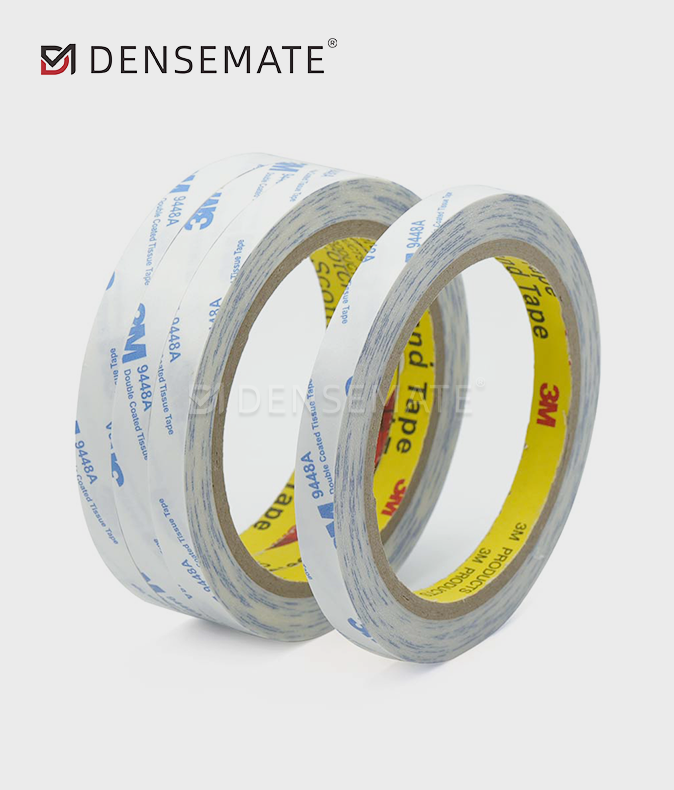
| 9448A | Double coated tissue | 0.15 mm | High-tack acrylic | General mounting, cost-sensitive jobs |
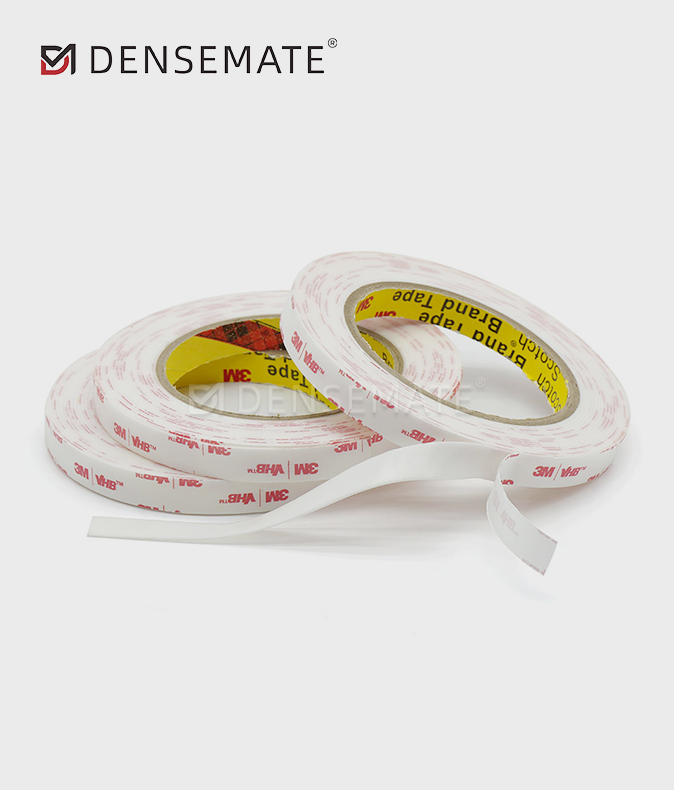
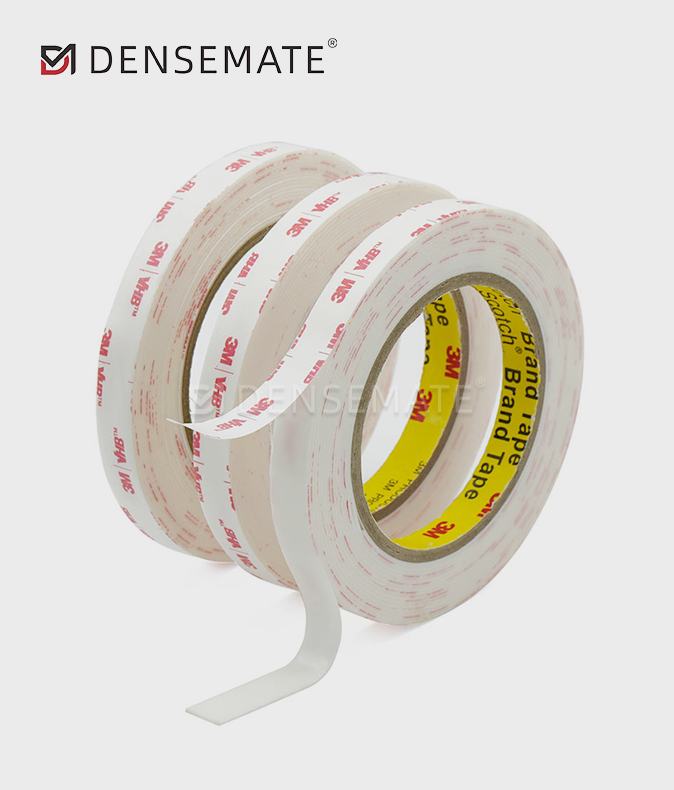
| VHB 5925 | Acrylic foam | 0.60 mm | Modified acrylic | Gap filling, load bearing, vibration |
Both use 300LSE. The difference is the carrier. Double coated tape 9495LE has a PET film in the middle; 9472LE does not. Choose 9495LE when parts must be die-cut, handled and placed by hand or robot without distorting. Choose 9472LE when total thickness must stay minimal or the surface is uneven enough that unsupported adhesive conforms better. Our lamination customers pick 9495LE roughly four times out of five.
9495LE versus 9495MP
The construction looks similar, but the adhesive changes everything. 200MP excels on high surface energy substrates and handles higher continuous heat. It underperforms badly on untreated polypropylene. Our side-by-side coupon tests on PP show 300LSE delivering roughly two to three times the 72-hour peel value. Choosing 200MP for a PP part is the single most common specification error we correct.
When you should move to acrylic foam instead
Film tapes need close-fitting parts. Where the gap varies by more than 0.2 mm, or where the joint carries real load and vibration, move to a foam tape such as VHB 5925 at 0.6 mm. Foam absorbs mismatch and differential expansion. Film gives you thinness and optical clarity. We send both when the drawing does not settle the question, because a courier fee beats a month of debate.
Should You Buy 9495LE Tape From Manufacturers or Distributors?
What distributors handle well
Distributors win on breadth and speed for standard items. They hold stock, ship in days, and carry clean brand documentation. Their catalog covers hundreds of SKUs, so a plant running many small consumable lines saves administrative effort. Their limitation shows up at conversion. Most will not slit double coated tape 9495LE to 6.5 mm, will not die-cut a bracket shape, and will not run a peel test on your polypropylene housing.
What converters and manufacturers handle well
A converter buys the master roll and turns it into your part. That capability changes the economics once a part repeats monthly. Our die-cut customers usually cut installed cost by 20–35% against buying full rolls and cutting in-house, because operator time and scrap disappear. Coating and R&D capability adds another layer: when 9495LE genuinely does not fit, an engineered alternative can be developed rather than merely substituted.
The math most buyers skip
Compare landed cost per finished part, not price per roll. Include roll price, freight, in house cutting labor, scrap, rework and inspection. One Shenzhen customer paid 11% more per square meter for die cut parts of double coated tape 9495LE, then cut total cost per unit by 28%. The saving came from removing two operators from a hand cutting bench and dropping lamination scrap from 2.1% to 0.4%.
What Should You Check Before Ordering 9495LE Tape?
A short pre-order review prevents most of the failures we investigate. Run through these five checks:
1. Confirm the substrate, including the grade and any mold release. "Plastic housing" is not a specification. Ask your molder for the resin grade and whether silicone-based release agents are used. Silicone contamination defeats almost every pressure-sensitive adhesive on the market. Send a 100 × 100 mm production coupon, not a virgin resin plaque, because the two behave differently in a peel test.
2. Define load, direction and service temperature honestly. Static hanging weight, shear along the bond line and peel at an edge all size the joint differently. Note peak temperature and its duration. The 149 °C ceiling assumes short exposure, while continuous service should stay well below it. Thermocouple data beats a nameplate rating every time in our experience.
3. Set a proper sample protocol before testing. Bond strength builds with dwell time. Test at 20 minutes for handling strength and at 72 hours for a real result. Apply about 100 kPa of pressure with a roller. Clean both surfaces with a 50:50 isopropyl alcohol and water wipe. Skipping the wipe is the most common cause of misleading sample failures.
4. Check dimensional tolerance and edge quality on arrival. Measure slit width at three points per roll with a calibrated caliper. Inspect for adhesive fines, telescoping and liner tears. Record results by lot. This ten-minute routine catches supplier drift months before it becomes a line stoppage, and it gives you objective evidence during supplier reviews.
5. Verify storage conditions and shelf life at your plant. Store rolls flat in original cartons, away from heat sources and direct sun, ideally near 22 °C and 50% relative humidity. Rotate stock oldest-out. Tropical warehouses in Vietnam and Thailand need a conditioned corner rather than a shelf beside the loading dock, where afternoon temperatures often pass 40 °C.
Complete these five checks, and your sample approval for double coated tape 9495LE will reflect the tape's real behavior rather than a handling error.
How to Ensure Reliable 9495LE Tape Supply?
Forecast, blanket order, release
Spot buying invites shortages. Give your supplier a rolling 8–12 week forecast, place a blanket order, and release monthly. Our ASEAN electronics customers using this model reported zero line stoppages from tape shortage across 2025. Plants buying purely on spot orders reported an average of 1.8 expedite events each. Air freight on one expedite typically wipes out a year of unit price savings.
Regional dual-sourcing without doubling qualification
Qualify one converter and one local stocking agent holding the same lot specification. The converter handles scheduled volume. The agent covers gaps under four weeks. Qualification cost stays low because both supply identical material. Our customers commonly hold 4–6 weeks of safety stock locally and rely on 3–5 day slit roll production for replenishment.
Case study: Bac Ninh, Vietnam — 2025
A 140-employee appliance electronics plant bonded a PP light-guide bracket to a powder-coated steel chassis. Their process used a solvent primer plus a general-purpose acrylic tape. Detachment during burn-in testing ran at 6.4%. We converted them to die-cut double coated tape 9495LE parts, 8 mm × 42 mm, applied with a 100 kPa roller.
Results across nine months: detachment fell to 0.3%. The primer station and its ventilation hood came out, saving 11 seconds per unit and about USD 14,000 a year in primer, solvent and filter costs. Their quality engineer, Ms. Trang, put it plainly during the closeout review: "We stopped arguing about which primer batch failed. That argument used to eat two hours a week."
Case study: Dongguan lamination line
A PRD electronics plant laminated transparent PET nameplates onto PC/ABS housings using hand-cut strips. Edge variation caused visible misalignment. Moving to slit rolls at ±0.10 mm and die-cut tabs dropped lamination scrap from 2.1% to 0.4% and removed two operators from the cutting bench. Total cost per unit fell 28%, even though material price per square meter rose 11%.
Case study: Rayong, Thailand — sensor housing
An automotive electronics supplier bonded a stainless bracket to a PP sensor housing. Validation required six temperature cycles of 8 hours at −20 °C and 8 hours at 65 °C / 90% RH, plus 100 hours water immersion. The 300LSE joint passed both with no measurable peel loss. Their approval cycle closed in 19 days against a 30-day plan.
Conclusion
Buying double coated tape 9495LE comes down to matching the channel to the job. Distributors suit standard rolls and fast catalog buying. Converters suit repeating die-cut parts and technical support. Marketplaces suit price discovery, provided you demand lot traceability. Local agents suit emergency cover.
The product itself earns its place through one property: 300LSE acrylic bonds polypropylene and powder-coated paint without primer. Our lab measures 62–78 N/100 mm peel on untreated PP at 72 hours. Field results back it up — one Vietnamese plant cut detachment from 6.4% to 0.3% and deleted a whole primer station.
Verify slit tolerance, ask for RoHS and REACH files upfront, test on your own molded parts, and forecast your volume. Do those four things and a 2–3 week qualification becomes routine rather than risky.
FAQ
1. Is 9495LE the same as 9495MP?
No. Both are double coated PET tapes, but the adhesives differ completely. Double coated tape 9495LE uses 300LSE acrylic, built for low surface energy plastics like polypropylene and powder-coated paint. 9495MP uses 200MP, which performs best on high surface energy metals and higher continuous temperatures. Our coupon tests show 300LSE delivering roughly two to three times the peel value on untreated PP.
2. Do I still need primer with 9495LE on polypropylene?
Usually no, and that is the main reason plants specify it. The 300LSE adhesive wets out on surfaces around 29–31 dyne/cm without a promoter. Heavily contaminated, flame-treated-then-aged, or filled PP grades can still need help. Send a production coupon and we run a dyne check to ASTM D2578 [3] plus a 72-hour peel test before you commit to a process.
3. What is the minimum order quantity, and can I get samples?
Free samples ship within 48 hours; you pay freight only. Trial quantities sit well below typical mass-production minimums, because a 120-roll trial usually becomes a 1,000-roll annual program. Slit rolls in widths from 5 mm to 600 mm deliver in 3–5 days. Die-cut parts deliver 7–10 days after you approve the drawing and tooling layout.
4. How tight can you slit a 0.013 mm PET carrier without damage?
We hold ±0.10 mm on slit widths from 5 mm upward and inspect three points on every roll. Blade pressure and web tension are logged per run. Edge dust matters as much as width for SMT and optical lines, so we run an edge-quality check before packing. Dimensional inspection reports ship with the goods on request.
5. Will 9495LE survive outdoor sun, water and cleaning chemicals?
Yes, within reason. Properly applied nameplates and decorative trim are not adversely affected by direct sunlight. Water immersion for 100 hours at room temperature leaves bond strength intact. The bond holds after exposure to oil, mild acids and mild alkalis [1]. Aggressive solvents and prolonged high-heat immersion remain outside the envelope, so validate against your actual cleaning chemistry
Move From Coupon Test to Locked Price in One Purchasing Cycle
Ready to price a real program? Send your substrate, part drawing, annual volume and target service temperature to sale@densemate.com. DENSEMATE quotes double coated tape 9495LE within 24 hours, ships free samples in 48 hours, and delivers slit rolls in 3–5 days or die-cut parts 7–10 days after drawing sign-off. Working with a double coated tape 9495LE manufacturer that runs its own coating and precision die-cutting keeps your trial and mass production on a single schedule.
References
1. 3M (2025). 3M™ Industrial Adhesives and Tapes — double coated tape product data and environmental resistance guidance. Cited in the sections on humidity, UV, water, temperature cycling and chemical resistance, and in the FAQ on outdoor performance.
2. ASTM International (2018). ASTM D3330/D3330M-04(2018), Standard Test Method for Peel Adhesion of Pressure-Sensitive Tape. Cited in the DENSEMATE lab data table and in the supplier lab-capability section.
3. ASTM International (2017). ASTM D2578-17, Standard Test Method for Wetting Tension of Polyethylene and Polypropylene Films. Cited in the surface energy explanation and in the polypropylene primer FAQ.
4. European Chemicals Agency (2025). Candidate List of Substances of Very High Concern for Authorisation (REACH). Cited in the supplier documentation checklist and the compliance FAQ.
5. European Union / EUR-Lex (2011, consolidated). Directive 2011/65/EU on the restriction of the use of certain hazardous substances in electrical and electronic equipment (RoHS). Cited in the document verification section and the compliance FAQ.
6. Grand View Research (2024). Adhesive Tapes Market Size, Share & Trends Analysis Report. Cited as background for global tape supply and regional sourcing context.
Online Message
YOU MAY LIKE
Here we will showcase some of our main products